

Readers may be curious about the headline for this story. The notation -30- at the end of a news story typically signifies the end of the text and is used to indicate that there are no more words to follow.
That’s why “-30-” headlines this story, because there will be no more words from Ohio Tavern News.
After careful consideration, the owners of the newspaper decided it was time to close OTN — and its parent publication, The Daily Reporter — on Dec. 12, both victims of a print newspaper business that has been declining for years while the costs of doing business keep going up.
OTN would have marked its 87th anniversary in May, having to this point survived the social and political upheavals of the beverage alcohol industry for more than eight decades. Ironically, it was the continuing demise of print media, particularly newspapers, that spelled its eventual doom, not the eroding of what once was a wide-based alcohol industry into a cabal of a few, powerful industry players.
OTN Origins
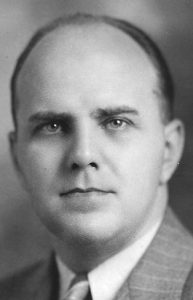
Charles W. Graves

Mark F. Flanagan
Headquartered in Columbus at 3134 N. High St., the first issue of OTN, published May 17, 1939, had 12 pages of news from the Ohio General Assembly, some sports news, reports of liquor violations in Akron, Mansfield and East Palestine, and an editorial congratulating municipal police departments for finally helping state liquor investigators look into violations. A one-year subscription to OTN cost $2 and single copies were available for 5 cents.
Just like many other businesses, OTN faced much debt in the post-Depression days. When things began to look bleak, Flanagan personally assumed financial responsibility for the newspaper and took sole control. Even after his death, the newspaper remained in control of his family until 1980, when it was sold.
OTN was published weekly for more than two years before World War II started. Due to wartime restrictions and shortages of supplies, namely newsprint, Flanagan moved OTN to a twice monthly publication, a schedule it retained until the end of 2024.
During OTN’s early days, Flanagan held to one principal: Get as much information to the permit holder as possible and get it there fast. In fact, the inaugural issue of the newspaper did not even mention that the publication was new or offer a description of its purpose. It wasn’t until OTN’s first anniversary, in 1940, that the publishers outlined in an editorial what the newspaper stood for and who was running the operation. They wrote:
“(OTN) was brought to the attention of the industry because the publishers believed that there was a place for a liquor trade journal in the Ohio field that had no axe to grind, that was devoted to publishing the news of the industry as it found it and as it happened and that had no affiliations which would prevent the publication of all of the news all of the time.
“Columbus, the capital of Ohio, the headquarters of the Ohio Department of Liquor Control and the Ohio Board of Liquor Control, was chosen as the city in which the Ohio Tavern News would be published, because it was felt that a newspaper and its representatives should be at the scene where news happened, and everything of consequence to the liquor industry in Ohio happens in Columbus. It was logical, therefore, that a trade journal should be published from the seat of activity. The publishers of the Ohio Tavern News believed that men who were familiar with the Ohio liquor picture should direct the destinies of the publication, for the Ohio Tavern News was to be a trade journal for Ohioans, edited by Ohioans and published by Ohioans.
“So the Ohio Tavern News was and is published and edited by Ohioans, men of experience, men who have knowledge of the liquor industry as it operates in the Buckeye State and of the problems that confront those who make a living from this industry. To all who read the Ohio Tavern News we give this promise: to continue in this year to give you the best news and the best features that it is possible to obtain to the end that the Ohio Tavern News shall continue to lead the liquor trade journal field in Ohio.”
After only one year in business, Flanagan’s newspaper had the largest circulation of any liquor publication in Ohio, a distinction it held to the end. The newspaper’s success even led Flanagan to start other publications, including Gasoline News and a West Virginia edition of OTN.
After 35 years as publisher of OTN, Mark Flanagan died in 1974. The newspaper remained under the control of the Flanagan family, with nephew Sean D. Flanagan serving as publisher until 1980, which began a decade of change for the newspaper.
In 1980, the younger Flanagan sold OTN to Paul L. Parshall and his Parex Corp. The Worthington-based company, which specialized in business newspapers, owned OTN until 1985, when it was sold again, this time to Daniel G. Russell, president of Reporter Publishing Co. in Columbus and publisher of The Daily Reporter, a legal and business newspaper.
Russell’s ownership of OTN was short-lived. In 1987, he sold his interests in both OTN and The Daily Reporter to Calcomco Inc., a small company established in 1986 by descendants of James E. Scripps, founder of The Detroit News. The sale to Calcomco would end the revolving door of ownership which marked the 1980s and usher in nearly four decades of relative stability.
The OTN-er

Paul Hendershot
During his time at OTN, Hendershot became known as the “OTNer” and rarely missed an industry function, camera in hand, to record the who’s who and happenings of the hey-day of the beverage alcohol industry. Hendershot retired from the newspaper in 1979, but was persuaded to return a year later; he remained with OTN until his official retirement in 1987.
“I didn’t have any idea I’d be here for 10 or 15 years. It was more something I thought I’d do for a short time,” Hendershot stated for an OTN story about his retirement. “I had thought more or less about getting into daily journalism, but I pretty much fell in love with this type of news publication.”
Hendershot may have left journalism when he retired, but he didn’t abandon the beverage alcohol industry. He quickly took a position as administrative assistant for Columbus-based liquor broker Postiy Wine and Spirits, and contributed several more years to the industry.
The Later Years

Chris Bailey
OTN made several moves over the years, from its original space on N. High Street, to several spots in downtown Columbus, up to Worthington, then back to its long-time home at 329 S. Front St. In July 2000, OTN moved to its present location in the Wolske Plaza at 580 S. High St.
The 1990s and 2000s saw OTN adapt to changing technology. Film and photo negatives where replaced by digital images. Page design transitioned from the drafting table to the computer, much like story writing and editing did in the 1980s. The newspaper added email in 1997 and a website — www.ohiotavernnews.com — in 2004.
At the beginning of 2025, the OTN website became the sole source of disseminating news as the decision was made to cease the print publication with the final issue of 2024.
As the book is closed on Ohio Tavern News, an enormous thank you must be extended to the myriad advertisers, readers, sponsors and staff — past and present — without whose support the past 86 years would not have been possible. As it has done since its inception in 1939, OTN did its best to continue providing valuable and timely information to the permit holders of Ohio until the end.
-30-